

Surviving a Central Florida summer requires a bulletproof cooling system and UV-resilient engineering, not fancy luxury trim. Anyone who has sat gridlocked on Interstate 4 while their air conditioning struggles against thick afternoon humidity knows the frustration firsthand. Between highway asphalt temperatures regularly topping 140 degrees and engine bay heat that wears down car batteries in just two to three years, finding the best used cars for Florida heat is essential for dependable daily driving.
You shouldn't have to worry about cracked dashboards, peeling clear coats, or unexpected roadside breakdowns every time the temperature climbs. You will discover which pre-owned cars, trucks, and SUVs hold up best against relentless sunshine, extreme humidity, and heavy traffic without draining your budget. We also review key inspection checkpoints to verify air conditioning and cooling system performance before you buy, helping you select a heat-ready vehicle that keeps you comfortable across Orlando and beyond.
Key Takeaways
- Understand how intense UV exposure and soaring asphalt temperatures accelerate wear on cooling systems, batteries, and interior plastics.
- Discover the mechanical features that matter most, including heavy-duty radiators, auxiliary coolers, and resilient climate control systems.
- Explore our top recommendations for the best used cars for Florida heat, highlighting sedans, crossovers, and trucks built for thermal endurance.
- Master a hands-on inspection checklist to evaluate vent temperatures, coolant health, and rubber wear before making a purchase.
- Learn how transparent local vehicle inspections and tailored financing simplify finding a dependable pre-owned car in Central Florida.
How the Brutal Florida Climate Impacts Used Cars
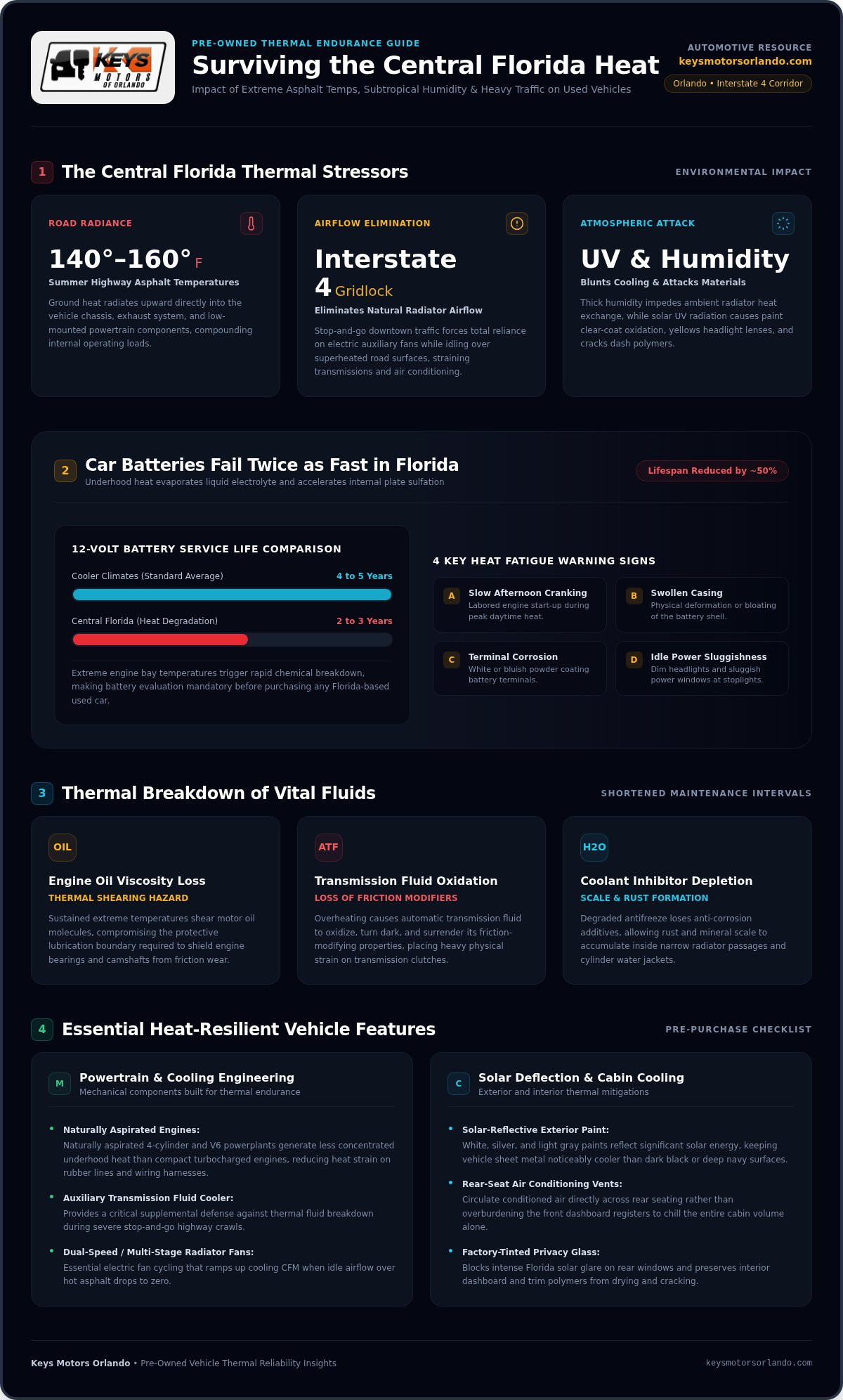
Central Florida roads present an unforgiving proving ground for any pre-owned vehicle. On summer afternoons, road asphalt temperatures frequently reach 140 to 160 degrees. That intense surface heat radiates upward directly into your chassis, exhaust, and cooling components. Pair that ground radiation with heavy atmospheric humidity, and your engine must work significantly harder just to keep operating temperatures stable.
High humidity prevents ambient air from cooling your radiator efficiently. Meanwhile, solar UV radiation relentlessly attacks your exterior clear coat, causing oxidation on unprotected roofs and hoods. Over time, that same radiation yellows clear headlight lenses and dries out interior dashboard polymers, leading to premature cracking. The best used cars for Florida heat are engineered with heavy-duty seals, reflective glass, and robust cooling loops designed to resist this constant atmospheric pressure.
Traffic patterns make these climate factors worse. Gridlock along Interstate 4 through downtown Orlando strips away the natural airflow that highway cruising provides. Instead, mechanical components rely entirely on auxiliary electric fans while idling over hot pavement. This relentless cycle places immense physical strain on transmissions, cooling hoses, and automotive air conditioning systems that run continuously at maximum capacity.
The Toll of High Heat on Engine and Transmission Fluids
Excessive operating temperatures degrade vital automotive fluids much faster than normal driving. Engine oil shears under sustained heat, losing the viscosity needed to protect bearings and camshafts. Transmission fluid experiences similar thermal stress; overheating causes it to oxidize, turn dark, and lose its friction-modifying properties. Degraded coolant loses its corrosion inhibitors, allowing scale and rust to form inside narrow radiator passages and water jackets. In Central Florida, staying ahead of fluid breakdown requires checking your levels regularly and sticking to shortened subtropical maintenance intervals.
Why Car Batteries Fail Twice as Fast in Florida
Many drivers associate dead batteries with freezing northern winters, but scorching heat is far more destructive. Extreme engine bay temperatures accelerate internal chemical reactions, evaporating liquid electrolyte solution and speeding up internal plate sulfation. While a standard 12-volt battery lasts four to five years in cooler climates, local drivers in Central Florida routinely see batteries fail within two to three years. Key indicators of heat-induced battery fatigue include:
- Slow, labored engine cranking when starting up on warm afternoons
- Swelling, bloating, or physical deformation of the battery casing
- Corrosive white or bluish powder building up around the terminal posts
- Dimming headlights or sluggish power window operation while idling at stoplights
Evaluating these wear points early helps you identify the best used cars for Florida heat that have been properly maintained by previous owners.
Essential Features That Make a Pre-Owned Vehicle Heat-Resilient
Not all vehicles handle sub-tropical climates with equal grace. While aesthetic trim packages add curb appeal, surviving long commutes between Orlando and Kissimmee requires mechanical hardware capable of shedding massive heat loads. Looking for specific engineering choices separates standard commuter vehicles from the best used cars for Florida heat. Prioritizing robust thermal design protects your investment and ensures comfortable travel year-round.
Paint color plays a measurable role in cabin comfort. Vehicles with white, silver, or light gray paint reflect significant solar energy, keeping the exterior sheet metal noticeably cooler than dark black or deep navy surfaces. Inside, factory-tinted privacy glass on rear windows blocks a portion of harsh glare. When shopping, prioritize vehicles equipped with functional rear-seat air conditioning vents, which circulate cool air quickly to back passengers rather than forcing the front dash registers to cool the entire cabin volume alone.
Powertrain Cooling and Transmission Protection
Engine configuration directly impacts underhood operating temperatures. Naturally aspirated four-cylinder and V6 engines typically generate less concentrated under-hood heat than compact turbocharged powerplants, placing less strain on nearby rubber lines and wiring harnesses. When navigating highway crawls, vehicles fitted with auxiliary transmission fluid coolers offer an essential safety barrier against fluid breakdown. Electric radiator cooling fans must also feature dual-speed or multi-stage cycling. Following NHTSA summer vehicle maintenance guidelines helps you confirm that cooling fans engage immediately when air conditioning activates during long idle periods.
Cabin Heat Management: Upholstery and Glass
Cabin materials determine how hospitable a car feels after sitting parked in open Florida parking lots. When evaluating interiors, consider how different surfaces respond to direct sunlight:
- Cloth upholstery: Breathes naturally, sheds heat quickly, and avoids the searing surface temperatures common to dark vinyl or standard leather.
- High-grade synthetic leather: Provides simple cleanup while resisting the shrinkage, hardening, and seam-splitting that unconditioned genuine hides suffer under intense UV rays.
- Ceramic window film: Unlike basic dyed tint that merely darkens glass, ceramic films reject high levels of infrared radiation without violating Florida tint limits.
- Rear cabin climate controls: Dedicated rear vents keep children, rear passengers, and pets cool without overworking front blower motors.
Focusing on these durability features ensures you drive away in a vehicle engineered to endure our southern climate. You can easily browse cooling-focused vehicles by viewing the current pre-owned inventory at Keys Motors in Orlando to see models built to withstand our intense sunshine.
Top Pre-Owned Models Proven to Handle Florida Heat
Selecting the right vehicle means looking past cosmetic appeal to evaluate long-term mechanical endurance under brutal conditions. Running full-blast air conditioning puts tremendous mechanical drag on any engine. As detailed in the FuelEconomy.gov hot weather driving guide, heavy climate control use significantly increases fuel consumption and thermal load on the powertrain. The best used cars for Florida heat rely on proven compressor engineering, durable interior plastics, and generous cooling surfaces. Before making a final decision, consult The Ultimate Guide to Buying Used Cars in Orlando: 2026 Edition for broader purchasing steps.
Best Compact and Midsize Sedans for Daily Commuters
For daily commuters facing heavy congestion, a few sedans consistently outperform the competition:
- Toyota Camry: Renowned for virtually indestructible Denso air conditioning compressors, the naturally aspirated four-cylinder and hybrid models deliver rapid cabin pulldown even while idling.
- Honda Accord: Offers efficient dual-zone climate systems and durable cabin materials that resist dashboard cracking better than most rivals in its class.
- Mazda 6: Provides an athletic chassis, high-quality cabin assemblies that withstand solar baking, and simple, robust cooling loops that keep repair costs low.
Best Family SUVs and Crossovers for Summer Travel
Family travel across Central Florida requires sustained interior airflow and generous passenger room. The Toyota Highlander stands out with its heavy-duty auxiliary rear climate unit, cooling three rows of seating effectively during humid July afternoons. Similarly, the Honda Pilot features roof-mounted ceiling vents that circulate air directly onto rear passengers, preventing heat pockets in the third row. For drivers seeking all-weather traction and resilient exterior cladding that resists road-grit etching, the Subaru Outback offers exceptional sun-tolerant weather seals and durable cabin upholstery.
Durable Pickups Built for Heavy Heat and Towing
Work trucks face an entirely different level of thermal stress when hauling payloads under direct sun. The Ford F-150 equipped with a factory towing package includes an oversized aluminum radiator, high-output electric fans, and an auxiliary transmission fluid cooler built to handle stop-and-go strain in Ocala. Meanwhile, V8-powered Chevrolet Silverado 1500 models feature expansive front grilles that maximize direct airflow across the condenser core, protecting internal fluids from thermal breakdown. Choosing one of these trucks ensures your transmission stays within safe operating parameters when pulling trailers through Central Florida heat.
Checklist: Inspecting a Used Car for Heat Wear Before You Buy
A thorough pre-purchase inspection protects you from unexpected cooling system repairs. When searching for the best used cars for Florida heat, you need to verify that prior sun exposure hasn't degraded essential mechanical parts. Start your walkaround by checking the vehicle's horizontal body panels. Inspect the hood, roof, and trunk lid under natural sunlight for cloudy clear-coat oxidation, micro-cracking, or clear-coat flaking. For an exhaustive vehicle walkthrough, review our companion guide on Inspecting Used Cars in Orlando: The Complete 2026 Buyer’s Checklist.
Testing the Climate Control and AC Compressor
Bring a digital thermometer on your test drive. Turn the air conditioning to maximum cold and recirculate mode while the vehicle idles in park. The register discharge temperature should drop below 45 degrees within five minutes without squealing noises from the compressor clutch or serpentine belt. Next, cycle through the vent modes across the dash, defrost, and floor registers. Listen closely behind the dashboard for rhythmic clicking sounds, which indicate a stripped blend door actuator gear. Finally, sniff the air right after switching the system on. Musty odors usually point to a clogged evaporator box drain tube, a frequent issue in humid Central Florida climates.
Under-the-Hood Cooling Component Inspection
Once the engine cools down completely, open the hood to inspect the cooling circuit. Look directly at the plastic side tanks on the radiator for hairline cracks or brownish discoloration indicating heat embrittlement. Examine the coolant recovery tank to confirm the fluid is translucent pink, blue, or green rather than cloudy brown or sludgy. Squeeze the upper radiator hose with your hand; it should feel pliable and spring back firmly, with no crunchy interior brittleness or spongy soft spots. Don't overlook the 12-volt battery either. Check the alphanumeric date stamp on the plastic casing. If that battery has been installed for more than 24 months, factor the cost of an immediate replacement into your budget.
Looking for a vehicle that has already cleared these demanding climate checks? Schedule a test drive at Keys Motors to explore pre-inspected inventory ready for Florida driving conditions.
Finding Your Next Heat-Ready Vehicle at Keys Motors in Orlando
Finding the best used cars for Florida heat shouldn't mean taking chances on uncertain mechanical conditions or surprise dealer markups. At Keys Motors, located on East Colonial Drive in Orlando, we take the stress out of pre-owned car shopping with complete transparency. Every vehicle on our lot completes a rigorous multi-point mechanical inspection before it ever reaches the front line. Our upfront pricing model eliminates hidden fees, ensuring drivers from Orlando, Kissimmee, and Ocala get clear value. If you want to understand how choosing pre-owned protects your financial health, read our guide on New vs. Used Car Depreciation in Florida: The 2026 Value Guide.
Quality Assurance Geared for Central Florida Roads
Commuting across Central Florida demands cooling systems that handle intense heat without hesitation. That is why our pre-sale vehicle inspection focuses heavily on climate-vulnerable components. Technicians thoroughly test cooling fans, radiator health, serpentine belts, and climate control compressors to confirm rapid cabin cooling. We also provide clear vehicle history reports so you can review prior ownership locations and past cooling maintenance. Drivers shopping for an initial vehicle can consult the 2026 Orlando First-Time Car Buyer Guide: Buy Confidently for practical steps. If you have a specific make or model in mind that isn't currently on our lot, our dedicated Vehicle Finder service will locate a heat-ready vehicle matching your exact criteria across Florida.
Straightforward Financing and Trade-In Support
Securing reliable transportation should be a smooth, predictable process. We work alongside established prime and subprime lenders, including Capital One, to provide flexible vehicle financing options designed around your personal budget. Online credit pre-qualification lets you explore payment options quickly from home, saving you hours at the dealership. If you currently own a car, our honest trade-in valuations help you apply its real value toward a dependable upgrade. Explore our reliable lineup and browse inspected pre-owned cars at Keys Motors to discover your next summer-ready ride.
Stay Cool on Central Florida Roads All Year Long
Extreme humidity and blistering road temperatures don't have to turn your daily commute into an ordeal. By prioritizing proven powertrain cooling loops, UV-resistant cabin materials, and rigorous pre-purchase checks, you can easily identify the best used cars for Florida heat. Taking the time to verify vent temperatures, hose integrity, and battery age protects your investment against the harshest summer driving conditions.
At Keys Motors, we eliminate the guesswork from used car shopping. Every vehicle at our East Colonial Drive showroom undergoes detailed cooling system and air conditioning evaluations to ensure it thrives on local highways. Paired with straightforward pricing that eliminates hidden surprises, our team proudly helps drivers across Orlando, Kissimmee, and Ocala find dependable transportation. Find your heat-ready used car at Keys Motors today and enjoy true peace of mind on every journey.
Frequently Asked Questions
How long do car batteries typically last in the Central Florida heat?
Car batteries in Central Florida typically last between two and three years. Intense under-hood heat accelerates chemical reactions, causing the battery's internal liquid electrolyte solution to evaporate rapidly. When combined with the heavy electrical load of running your climate control at full blast, automotive batteries degrade twice as fast as those in northern states. Getting your voltage tested regularly after 24 months ensures you won't get stranded in an Orlando parking lot.
Does exterior car paint color really affect cabin temperature in Florida?
Yes, exterior paint color makes a measurable difference in cabin temperature. Dark colors like black, navy, and charcoal absorb significant solar radiation, transferring heat directly into the roof and passenger cabin. Lighter shades like white, silver, and champagne reflect solar rays, keeping sheet metal noticeably cooler. When evaluating the best used cars for Florida heat, choosing a lighter exterior color reduces the initial workload on your air conditioner after parking in direct sunlight.
Can dark leather car seats survive intense Florida sun without cracking?
Dark leather car seats can survive Florida sunshine, but they require consistent maintenance to avoid drying out and cracking. Direct ultraviolet exposure and cabin greenhouse heat leach the natural oils out of genuine leather hides. To preserve the material, park in shaded spots, apply a quality UV-blocking leather conditioner every few months, and install ceramic window tint. High-grade synthetic seating or durable cloth upholstery often holds up better against long-term sun baking in Kissimmee.
Is an auxiliary transmission cooler necessary for everyday driving in Orlando?
While not strictly required for compact commuter cars, an auxiliary transmission cooler provides valuable protection for larger SUVs, trucks, and vehicles that tow. Heavy stop-and-go congestion on Interstate 4 generates excessive fluid heat without the cooling benefit of highway airflow. An extra cooler keeps transmission fluid below critical thermal breakdown thresholds. If you commute long distances in heavy traffic or haul recreation trailers near Ocala, this upgrade significantly extends gearbox life.
Why does my car air conditioner blow warm air when idling in traffic?
An air conditioner that blows warm air while idling usually suffers from weak airflow across the condenser or an aging compressor. When your car stops moving, it relies entirely on the electric radiator fan to pull outside air across the AC condenser coils. If that fan motor weakens or fails, refrigerant cannot release heat. Low refrigerant levels, a slipping drive belt, or an overtaxed compressor clutch can also cause cooling loss during low-engine-RPM idling in humid Orlando traffic.
What is the most heat-resistant used car brand for Florida drivers?
Toyota and its luxury sibling Lexus consistently rank as the most heat-resistant brands for Florida drivers. These models feature heavy-duty Denso climate control components, robust radiator systems, and durable interior composites that hold up against intense UV rays. Their naturally aspirated four-cylinder and hybrid platforms handle prolonged idling exceptionally well, making them widely recognized among the best used cars for Florida heat for daily driving throughout Orlando and Kissimmee.
How often should I flush my engine coolant when driving in Florida?
You should flush your engine coolant every 30,000 miles or two to three years in Florida, even if factory manuals suggest longer intervals. Central Florida's persistent heat and high humidity degrade chemical rust inhibitors and anti-corrosion additives much faster than in moderate climates. Old, acidic coolant allows rust and mineral deposits to build up inside narrow radiator passages, causing unexpected overheating during summer rush hours. Fresh fluid ensures proper thermal transfer and keeps water pumps operating smoothly.


