

That pristine odometer reading on an older sedan might look like a dream, but the reality of Central Florida driving often tells a different story. Many drivers assume that hunting for low mileage used cars is the only way to avoid the stress of a breakdown on I-4. You want a vehicle that feels dependable without a massive monthly payment. It's natural to feel anxious about whether a car's history matches its price tag or if rapid depreciation will eat your investment before you're ready to trade it in.
We understand that choosing between an older model with 30,000 miles and a newer model with 80,000 miles is confusing. You deserve a partner who provides financial clarity rather than high-pressure sales. This 2026 comparison guide looks at the current Orlando market to help you secure the best value for your commute. We'll explore maintenance costs, resale potential, and how to spot a reliable gem. By the end, you'll know which choice leads to lower monthly costs and higher peace of mind over the next few years.
Key Takeaways
- Learn how to define "low mileage" in the 2026 market to ensure your next vehicle handles the Orlando commute with ease.
- Compare the financial benefits of older low mileage used cars against newer models to see which option minimizes your total cost of ownership.
- Discover the specific age and odometer "sweet spot" that balances a lower monthly payment with high long-term reliability.
- Understand why a consistent maintenance history is often more important than a low odometer reading when protecting against Florida heat.
- See how online tools for financing and vehicle searching can create a transparent, stress-free path to your next car.
The Appeal of Low Mileage Used Cars in Central Florida
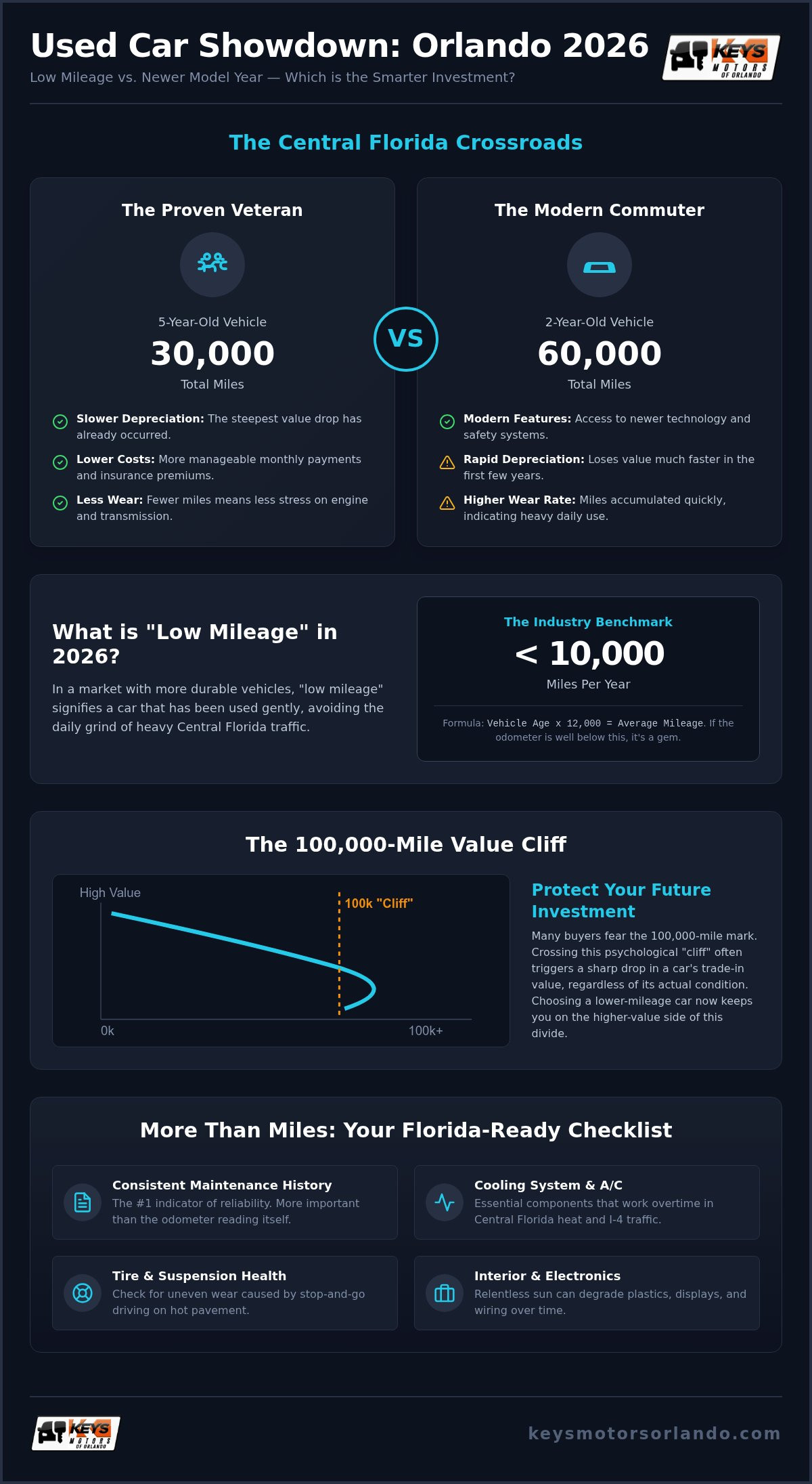
Finding low mileage used cars in Orlando often feels like securing a long-term insurance policy for your daily commute. In 2026, the definition of "low mileage" has shifted slightly as vehicles become more durable. Generally, a car that averages fewer than 10,000 miles per year falls into this desirable category. For Orlando drivers, these numbers represent more than just a figure on a screen. They signify less time spent idling in heavy I-4 traffic and fewer cycles of wear on critical components like the transmission and cooling system. Understanding how odometers work helps you realize that while the number is a useful guide, it's the story behind those miles that truly determines a vehicle's remaining life.
There's a quiet confidence that comes with sitting behind the wheel of a car that hasn't been pushed to its limits. This psychological peace of mind is vital when you're facing the unpredictability of Central Florida weather and road conditions. It isn't just about the engine; it's about the suspension, the interior fabrics, and the electronic sensors that haven't been subjected to years of vibration and heat. At Keys Motors - Orlando, we see how this translates into lower maintenance costs for our neighbors during those first few years of ownership.
Understanding the 12,000-Mile Benchmark
The automotive industry typically uses 12,000 miles as the baseline for average annual use. To determine if a vehicle is a "low mileage" standout, simply multiply its age by 12,000. If the current reading is significantly lower, you've found a candidate that likely hasn't faced the grueling daily grind of Central Florida sprawl. In our region, where a "quick trip" often involves thirty minutes on the highway, finding a car that stayed under this threshold suggests it was used for light errands or short local trips around Kissimmee or Ocala. We prioritize these gems because they offer the longevity our customers need.
Resale Value and the Odometer
Low-mileage vehicles consistently hold their value better in the Florida market because they're perceived as having a "cleaner" history. There is a psychological "cliff" at 100,000 miles that many buyers fear. Crossing that six-figure mark often triggers a sharp drop in trade-in valuation, regardless of how well the car runs. By choosing low mileage used cars now, you protect your future investment. When you're ready to trade in your vehicle in three to five years, having a lower odometer reading ensures you stay above that value cliff, making your next purchase even more affordable and stress-free.
Low Mileage vs. Newer Model Year: Which is the Better Investment?
Deciding between a low-mileage older car and a newer model with high miles is a common crossroads for Orlando shoppers. One path offers mechanical preservation, while the other provides modern convenience. Consider a five-year-old vehicle with just 30,000 miles versus a two-year-old car that has already clocked 60,000. While the newer car might look more current, it has likely endured more stress on its components in a shorter timeframe. Choosing low mileage used cars often means you're getting a vehicle that spent more time in a garage than fighting through rush hour.
Depreciation plays a massive role in this decision. Newer cars lose value at a much faster rate, even if they have high mileage. By the time a car is five years old, that initial value drop has already happened. This makes older, low-mileage options a more stable financial choice for many families. Understanding New vs. Used Car Depreciation in Florida helps you see why the older car might actually be the smarter investment over the next three to five years. We prioritize transparency in these comparisons, following the federal Used Car Rule to ensure you have all the facts before signing.
The Case for Low Mileage (Older Models)
Older vehicles with low mileage are often "garage-kept" gems. These cars usually feature pristine interiors and paintwork that hasn't been faded by the relentless Florida sun. Because the purchase price is lower due to age-related depreciation, your monthly payments are typically more manageable. You'll also likely benefit from lower insurance premiums, as insurers often charge less for older models. It's a practical way to get a high-quality ride without the "new car" price tag. If you're looking for a specific model year, our online vehicle finder can help you track down these rare finds.
The Case for Newer Models (Higher Mileage)
Newer models, even those with higher mileage, offer advantages in technology and safety. If you prioritize driver-assist features like lane-keeping or blind-spot monitoring, a 2024 model is more likely to have them as standard equipment. Fuel efficiency has also improved rapidly; many newer sedans and SUVs feature hybrid powertrains that weren't common five years ago. You'll also get modern infotainment systems like Apple CarPlay and Android Auto, which make the daily commute much more enjoyable. While the mechanical wear might be higher, the daily experience feels much more contemporary.
The 'Sweet Spot': Finding the Ideal Balance of Age and Odometer
The "sweet spot" in the used car market is where mechanical reliability meets financial common sense. For most buyers in Central Florida, this means targeting vehicles that are between three and five years old. During this period, the heaviest depreciation has already occurred, yet the car remains modern enough to offer dependable service for years to come. We often recommend looking for low mileage used cars that fall within the 30,000 to 50,000-mile range. This is the "Goldilocks" zone. These vehicles are typically well-maintained and still feel fresh, but they carry a much more accessible price tag than a brand-new model. Finding these gems requires a methodical approach, starting with a clear understanding of what those miles represent.
The Depreciation Curve Strategy
Strategic buyers focus on the first 36 months of a vehicle's life. A car typically loses a significant portion of its value during this initial window, often dropping sharply as soon as it leaves the lot. By purchasing a car that has just crossed the three-year mark, you let the first owner absorb that steep financial hit. This approach allows you to secure a high-quality vehicle while it still potentially carries a portion of its original factory warranty. It's a smart method that balances long-term protection with a lower monthly payment. Our vehicle finder tool is designed to help you filter by these specific age and mileage parameters, making it easy to see exactly what's available in our current inventory.
Evaluating 'Highway Miles' in Central Florida
Not all miles are created equal, especially given the unique geography of our region. A car that spent its life commuting from Ocala to Orlando on the highway often has less mechanical wear than one that suffered through stop-and-go downtown traffic. Highway driving keeps the engine at a steady operating temperature and puts far less strain on the brakes and transmission. To spot a highway cruiser, look for minor stone chips on the front bumper. These are common signs of high-speed travel. Conversely, heavy wear on the brake pedal or frequent transmission shifts can indicate a harder city life. Always validate these findings with a comprehensive vehicle history report. This document confirms the odometer reading and provides a record of past service visits. It's an essential tool for ensuring the low mileage used cars you're considering have been cared for properly and aren't hiding hidden issues.
Beyond the Odometer: Inspecting Quality for Florida Roads
Odometer numbers are only part of the story in the Sunshine State. While low mileage used cars often represent a great starting point, Orlando's extreme heat and high humidity can be just as taxing as a long commute. A vehicle that sits idle for months in a driveway faces unique risks that a daily driver avoids. Rubber components, including belts and seals, can become brittle and crack when they aren't regularly lubricated by moving fluids. This "dry rot" can lead to sudden failures once the car returns to heavy use. Every buyer should prioritize a physical inspection that goes beyond the surface level.
Pay close attention to the cooling system and air conditioning. If these systems have been stagnant, seals may have dried out, leading to refrigerant leaks or coolant seepage. In our local climate, an AC failure isn't just an inconvenience; it's a safety issue. Before you commit to any purchase, review our Inspecting Used Cars in Orlando: The Complete 2026 Buyer’s Checklist to ensure every major system is ready for the intense Florida summer.
The Maintenance-to-Mileage Ratio
A well-documented service history is often more valuable than a low number on the dash. We frequently see high-mileage vehicles with twenty documented oil changes and fluid flushes that outlast "pristine" cars with zero records. Florida's humidity can cause moisture buildup in engines that aren't driven long enough to reach full operating temperature. This creates sludge that damages internal components over time. You want a car that has been exercised and maintained, not one that has been forgotten. Service frequency is the true metric of car longevity.
Safety and Tech Considerations
Safety standards have advanced significantly between 2020 and 2026. A newer model with higher mileage might actually offer better protection in an I-4 collision due to improved crumple zones and advanced airbag systems. Additionally, evaluate the tires carefully. Florida's hot asphalt can reach temperatures that accelerate wear and cause "heat cycling," which hardens the rubber. Even if the tread looks deep on low mileage used cars, check the date codes on the sidewalls to ensure the rubber is still pliable. Tires older than six years are often unsafe for highway speeds, regardless of how much tread is left.
To see how we verify the quality of our inventory for these local issues, browse our latest pre-owned cars today.
Finding Your Next Reliable Ride at Keys Motors Orlando
At Keys Motors, we believe finding a vehicle should be as smooth as a clear day on the 408. We've spent years curating a diverse inventory that serves drivers across Orlando, Kissimmee, and Ocala. Whether you've decided on an older model with few miles or a newer car with more tech, our team helps you navigate the trade-offs with total transparency. We don't use high-pressure sales tactics. Instead, we act as your local expert to ensure you find a ride that fits both your budget and your lifestyle. Our goal is to build long-term trust by providing the peace of mind you need when navigating Central Florida traffic.
The Keys Motors Difference
Our local expertise is a vital asset for Central Florida drivers. We understand that a car driven in Ocala faces different conditions than one used for short trips in downtown Orlando. This knowledge allows us to hand-pick low mileage used cars that are truly ready for the road. If you're wondering about the Best Car Type for Kissimmee or other local areas, we can match you with a vehicle that handles the heat and the humidity. We treat every customer like a neighbor, offering honest advice on which model year offers the best value for your specific commute.
We prioritize financial clarity from the start. You can use our online trade-in valuation tool to see exactly what your current car is worth, helping you maximize your down payment. For financing, we partner with reputable lenders like Capital One to provide flexible options that work for your situation. You can even pre-qualify online with no impact on your credit score. This transparency ensures you know your buying power before you arrive, making the entire experience manageable and stress-free.
Start Your Journey Online
Your search begins at home with our easy-to-use digital tools. Browse our current pre-owned cars and filter by the "sweet spot" ranges we discussed earlier. Our online vehicle finder is a powerful resource for locating specific low mileage used cars that meet your age requirements. Our online loan calculators also help you stay within your monthly budget, ensuring there are no surprises during the buying process. Once you've found a few candidates, visit us at our East Colonial Drive location to see them in person. We're here to make your transition to a reliable vehicle simple, honest, and predictable.
Drive with Confidence in Central Florida
Finding the right balance between age and mileage doesn't have to be a stressful process. By focusing on the three-to-five-year "sweet spot" and prioritizing a solid maintenance history, you can avoid the common pitfalls of the Orlando market. Whether you're navigating the daily grind on I-4 or running errands in Kissimmee, the right vehicle provides long-term value and predictable ownership costs. It's about choosing a car that has been cared for properly, not just one with a low number on the dash.
At Keys Motors, we use our local expertise to help you find high-quality low mileage used cars that fit your specific lifestyle. We're proud to offer transparent pricing with no hidden fees and flexible financing through top lenders like Capital One. Our team acts as your friendly guide, ensuring you feel supported rather than pushed. We've served the Orlando community for years and understand exactly what it takes to keep you moving safely on our roads.
Take the next step toward a more reliable commute. Browse our current low-mileage inventory in Orlando today! We look forward to helping you find a vehicle you can depend on for years to come.
Frequently Asked Questions
What is considered good mileage for a used car in 2026?
Most industry experts in 2026 consider between 10,000 and 12,000 miles per year to be the standard for a well-maintained vehicle. If you're searching for low mileage used cars, look for totals significantly under this annual average. Modern engines and transmissions are built with higher durability than previous generations. A car with 60,000 miles that's five years old is often just entering its prime rather than nearing its end of life.
Is it better to have a 10-year-old car with 50,000 miles or a 3-year-old car with 100,000 miles?
A 3-year-old car with 100,000 miles often represents better value for Orlando commuters because those miles were likely highway-driven. These newer models feature advanced safety tech and better fuel efficiency that a decade-old vehicle lacks. However, the 10-year-old car with 50,000 miles might have less wear on the interior fabrics. We help you evaluate your specific needs, whether you prioritize a lower purchase price or modern features for your Kissimmee drive.
Does low mileage always mean a car is in better condition?
Low mileage doesn't automatically guarantee a car is in superior condition. A vehicle that sat idle for long periods in the Florida sun might suffer from dry-rotted tires or brittle engine seals. Conversely, a higher-mileage car with a documented service history often performs more reliably. We recommend looking beyond the odometer to inspect the cooling system and rubber components, as consistent use and regular fluid changes are the true indicators of health.
How much does mileage affect the resale value of a car in Orlando?
Mileage significantly impacts resale value in the Central Florida market. Vehicles typically see a sharp drop in valuation once they cross the 100,000-mile threshold. Because Orlando drivers often face long commutes on I-4, buyers prioritize low mileage used cars to ensure they have plenty of usable life left. Keeping your odometer reading lower helps you secure a higher trade-in valuation when you're ready to upgrade your vehicle at our dealership in the future.
Are high-mileage cars harder to finance in Central Florida?
Financing a high-mileage car can be more challenging with some lenders, but it's not impossible. Banks often set limits on vehicle age and mileage to protect their investment. At Keys Motors, we partner with top lenders like Capital One to provide flexible financing options for a wide range of inventory. Your credit score and the overall condition of the vehicle often matter as much as the specific number on the odometer during the approval process.
What are the risks of buying a car that has been sitting idle in Florida heat?
Buying a car that's sat idle in the Florida heat carries risks like battery degradation and fluid contamination. Humidity causes moisture to build up inside the engine and transmission, which can lead to internal corrosion if the car isn't driven enough. Tires also flat-spot and become hard or unsafe over time. We inspect all our pre-owned inventory for these specific local issues to ensure every car is road-ready for our Ocala and Orlando neighbors.
Should I worry about a car with 100,000 miles if it has a full service history?
You shouldn't worry about a car with 100,000 miles if it comes with a comprehensive service history. Modern vehicles frequently reach 200,000 miles or more when owners follow the manufacturer's maintenance schedule. A full record of oil changes, belt replacements, and fluid flushes proves the car was cared for properly. These vehicles often represent a fantastic bargain, offering high reliability and modern features at a much lower entry price than lower-mileage alternatives.
How do I check if a low mileage reading is legitimate?
You can verify an odometer reading by reviewing a vehicle history report, which tracks mileage at every service visit. Look for logical progression in the recorded numbers over the years. Additionally, check for physical signs of wear that don't match the reading. Heavy wear on the driver's seat bolster, steering wheel, or brake pedal in a car claiming very low mileage can be a red flag. We provide transparent reports for all our inventory.


